

France's MLRS Gap, An Opening for Hanwha?
IFRI analysis portrays Hanwha Aerospace's M239 Chunmoo as the most balanced option for France’s interim MLRS requirement
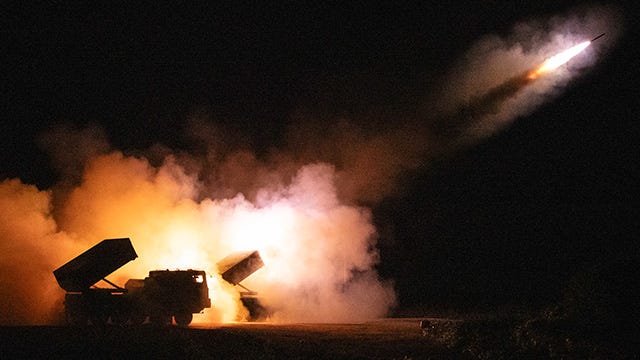
The South Korean defense industry’s remarkable export growth over the past several years can be attributed in part to Hanwha having the right systems at the right time. The K239 Chunmoo multiple launch rocket system (MLRS) has been a clear example—and it may now be positioned to achieve something unprecedented for a South Korean defense firm: entry into a Western European “Big Three” defense market.
Why It Matters
Western Europe’s major defense markets, such as the United Kingdom, France, and Germany, have historically proven difficult for foreign entrants due to established domestic champions and bilateral or multilateral European procurement programs. Among these countries, France is arguably the most sovereignty-conscious, having long prioritized domestic solutions even at significant cost premiums.
However, when it comes to MLRS, buying French or even European is not an option for the next several years given the absence of a European system. As a result, France has been evaluating the usual suspects: Lockheed Martin’s M142 HIMARS (US), Elbit’s PULS (Israel), and Hanwha Aerospace’s K239 Chunmoo (South Korea). Paris is also known to be considering the Pinaka (India).
While the Ministère des Armées has yet to publicly indicate its preference, the French Institute of International Relations (IFRI) has just published a report assessing these options.
The Requirement
France currently operates a fleet of around 10 aging M270 systems with a limited range of 70–80 km. The existing fleet may no longer be sustainable beyond 2027, creating an urgent need for an interim solution.
Paris has launched the FLP-T program to develop a sovereign replacement, but it will not be operational until at least 2030. The French Army has stated a requirement for strike capabilities at 150 km and beyond. The optimal fleet size is estimated at 70 systems to equip two regiments, organic corps elements, and training units.
In the interim, the 2024–2030 defense programming law (Loi de Programmation Militaire) envisages acquiring 13 systems by 2030, followed by an additional 13 by 2035.
IFRI’s Assessment
The IFRI report evaluated each candidate across several criteria, including technical performance, delivery timelines, supply chain considerations, and implications for strategic autonomy. While the report refrains from explicitly endorsing a particular system, it appears to describe the Chunmoo more favorably than the alternatives, portraying the South Korean platform as offering the most balanced combination of performance, industrial support, and strategic autonomy.
The following are among the report’s key findings:
Performance and Versatility
The Chunmoo meets the French Army’s stated requirement for strikes at 150 km and beyond. Its CTM-290 tactical missile reaches 290 km, significantly outperforming the current French LRU (70–80 km) and the Indian Pinaka (120 km, still in testing). Munitions with ranges exceeding 300 km are in development and expected before 2035. Unlike older systems limited to a single rocket type, the Chunmoo is a third-generation platform capable of accommodating a wider spectrum of munitions, including 239mm guided rockets, anti-ship ballistic missiles, and loitering munitions currently under development.
Industrial and Logistical Advantages
South Korea’s production capacity enables significantly faster delivery timelines than competitors. Poland received its first units within a year of contract signing and will take delivery of all 288 systems by 2027—a stark contrast to HIMARS, which currently faces multi-year backlogs. Additionally, ammunition production lines are being established in Poland, and France could potentially tap into this Hanwha-led European supply chain.
Strategic Autonomy Considerations
The report notes that HIMARS, while technically mature, is subject to strict U.S. export controls. Washington’s restrictions on Ukraine’s use of long-range munitions illustrate the operational constraints that could apply to European users. The Israeli PULS, while technically competitive, faces political complications given ongoing Franco-Israeli tensions. Additionally, Lockheed Martin has refused to authorize the use of M31 rockets on the PULS platform, limiting the Israeli system’s ammunition options.
Why Not Pinaka?
France and India maintain a strong strategic partnership, with discussions of 114 additional Rafale purchases reportedly imminent. Nevertheless, the report advises against the Pinaka. Beyond lower performance specifications, the analysis raises concerns about ammunition quality following past accidents, precision limitations, and susceptibility to electromagnetic jamming due to civilian components. Critically, Pinaka munitions were not developed to NATO standards in terms of calibers, safety protocols, or pyrotechnic norms. The report warns that adopting a less capable, non-interoperable system would “undermine French military credibility” and contradict Paris’s stated advocacy for European defense procurement preferences.
What to Watch
If Paris opts for the Chunmoo, it would validate Hanwha’s positioning as the preferred non-American option for NATO militaries seeking modern MLRS capabilities without the constraints of U.S. export controls. Key indicators to monitor:
FLP-T Progress: Any delays in France’s sovereign MLRS program will increase pressure to accelerate an interim procurement decision
The 2027 Deadline: With the existing M270 fleet potentially unsustainable beyond 2027, the next 12–18 months represent a critical decision window
Franco-Polish Defense Ties: Following the May 2025 Treaty of Nancy, watch for signals on whether artillery cooperation becomes a concrete area of bilateral engagement
Spillover Effects: A French endorsement could influence ongoing evaluations in Romania, where the Chunmoo is reportedly under consideration, and accelerate discussions with other M270 legacy operators across Europe and beyond.
K-Defense Monitor (”KDM”) is an independent publication providing open-source intelligence analysis on South Korea’s defense industry. All content is derived from publicly available sources, including Korean- and English-language media, corporate disclosures, regulatory filings, and government announcements. Although KDM obtains information from sources believed to be reliable, it makes no representation or warranty, express or implied, as to its accuracy, completeness, or timeliness, and has no obligation to update previously published content. Readers are encouraged to consult original sources before acting on information contained in this publication. Nothing in this newsletter constitutes investment advice, a securities recommendation, or a solicitation to buy, sell, or hold any financial instrument. KDM is not a registered investment adviser, broker-dealer, or financial institution. The inclusion of contract values, financial figures, or corporate developments is for informational purposes only. Readers should consult qualified financial, legal, and tax advisors before making investment decisions. Financial figures may involve currency conversions at approximate rates stated where applicable; actual rates may differ. KDM maintains full editorial independence and has no commercial or contractual relationship with any defense company, government agency, or financial institution referenced herein. Views expressed are solely those of the author and do not represent the positions of any affiliated organization. KDM, its author, and its affiliates accept no liability for any loss or damage arising from reliance on information in this publication. All content is provided on an “as is” basis without warranties of any kind.
© 2026 K-Defense Monitor. All rights reserved. No part of this publication may be reproduced, redistributed, or forwarded — in whole or in part — without prior written consent.