

Drone Pragmatism Over Fanaticism: Why We Need Nuance in Learning from Ukraine
Drones matter, but they're not a silver bullet. It's time we had a more honest conversation about their limitations
It’s not every week that I get to start off Monday morning with a smile.
This morning, I came across a Foreign Affairs article, titled ‘America’s Drone Delusion,’ which argues that widespread enthusiasm for mass drone acquisition, driven by observations from the Russo-Ukrainian war, may be fundamentally misguided when preparing for potential conflicts against the likes of China.
“Millions of battlefield quadcopters and tens of thousands of one-way attack drones have not enabled Russia to defeat Ukraine, or vice versa. Even if the Pentagon acquires similar capabilities, they will not change its rapidly degrading balance of power with China in the Indo-Pacific, no matter how good swarms of AI-enabled drones might look on PowerPoint slides.” - Justin Bronk
The article articulates what some defense analysts have been thinking but haven’t voiced loudly enough in public discourse: while uncrewed systems certainly have an important role to play in future wars, the notion that they have fundamentally changed the character of war is a dangerous oversimplification.
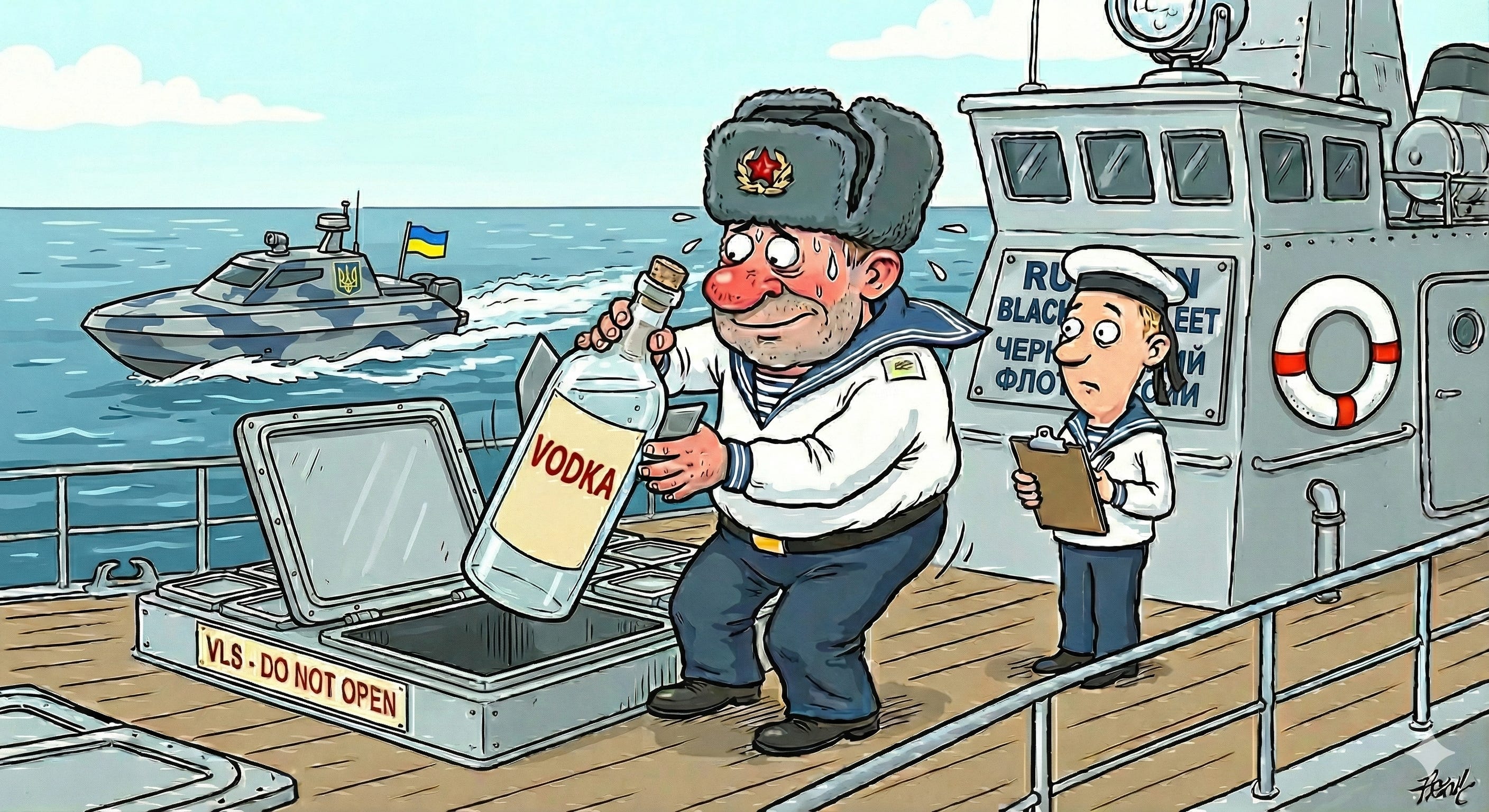
Consider one frequently cited example: Ukraine’s use of uncrewed surface vessels (USV) against Russia’s crewed surface combatants in the Black Sea. This has been repeatedly trumpeted as proof that uncrewed systems have revolutionized naval warfare and rendered crewed surface combatants obsolete.
It is critical to point out that this narrative conveniently and dangerously ignores the fact that the Russian Navy’s surface fleet entered the war already suffering from significant readiness challenges. Yet commentators have extrapolated from this success to suggest that similar uncrewed systems would defeat the US Navy or PLA Navy, both of which operate modern, well-maintained fleets noticeably in better condition than Russia’s degraded Black Sea Fleet.
Simply, Ukraine’s maritime drone success is less a revelation about the future of naval warfare than a case study in exploiting a degraded force operating in a constrained littoral environment.
Let me be clear: I am not arguing that uncrewed systems are irrelevant. Quite the opposite. I believe uncrewed systems will play critical roles in future military operations, with their importance varying based on operational context. For instance, in seabed warfare, mine hunting, and intelligence-gathering operations, uncrewed systems offer invaluable capabilities that crewed platforms cannot match.
In public discourse, drone fanaticism has too often drowned out cautionary voices or dismissed them as defenders of outdated paradigms. That’s why the Foreign Affairs article was refreshing, as it is hopefully a signal that a more rigorous debate may finally be emerging.
For readers interested in deeper analysis, I’ve listed several articles published in recent years that paint a more nuanced picture. They examine the rapid evolution of countermeasures, operational limitations of current systems, massive human capital requirements, and contextual factors that challenge the notion of Ukraine as a template for future conflicts.
Drones certainly have their place in warfare, but they’re no panacea. Let’s learn the right lessons.
‘Drone Hype and Airpower Amnesia,’ Air & Space Forces (2025)
‘Drones Won’t Save Us: Learning the Wrong Lessons from Ukraine Will Cost the US Army its Edge in Maneuver Warfare,’ Modern War Institute (2025)
‘Small Drones, Big Limits: A Smarter Drone Strategy,’ Irregular Warfare Initiative (2025)
‘The risks of learning the wrong lessons in Ukraine,’ Breaking Defense (2023)
‘Why the Next Fighter Will Be Manned, and the One After That,’ War on the Rocks (2015)